Verification Technology's Role in Dealer-Hosted Card Game Participation Dynamics
Written by Quinn Wagner · Sep 8, 2026

Verification Technology's Role in Dealer-Hosted Card Game Participation Dynamics
Instant verification systems have become standard components in dealer-hosted card game platforms, where players join live tables for poker, blackjack, and similar games through digital interfaces, and these tools handle identity confirmation, age checks, and account setup in seconds rather than days. Data from multiple markets shows participation rates often rise when verification moves from manual review to automated processes because the time between registration and first hand decreases sharply. In September 2026 operators across several jurisdictions reported measurable upticks in table occupancy following system upgrades that completed checks in under thirty seconds.
Mechanics of Instant Verification in Hosted Card Environments
These systems pull data from government databases, credit bureaus, and biometric sources to confirm player details while the user remains on the registration page, and integration with payment processors allows simultaneous funding of accounts. Observers note that platforms using optical character recognition on uploaded documents combined with facial matching achieve completion rates above 85 percent on the first attempt according to industry tracking services. Dealer-hosted games benefit particularly because sessions run in real time and players who face delays often exit before reaching the table. Research from the University of Nevada, Las Vegas gaming studies program indicates that friction at onboarding correlates directly with lower session starts in live dealer formats.
Measured Effects on Player Numbers and Retention
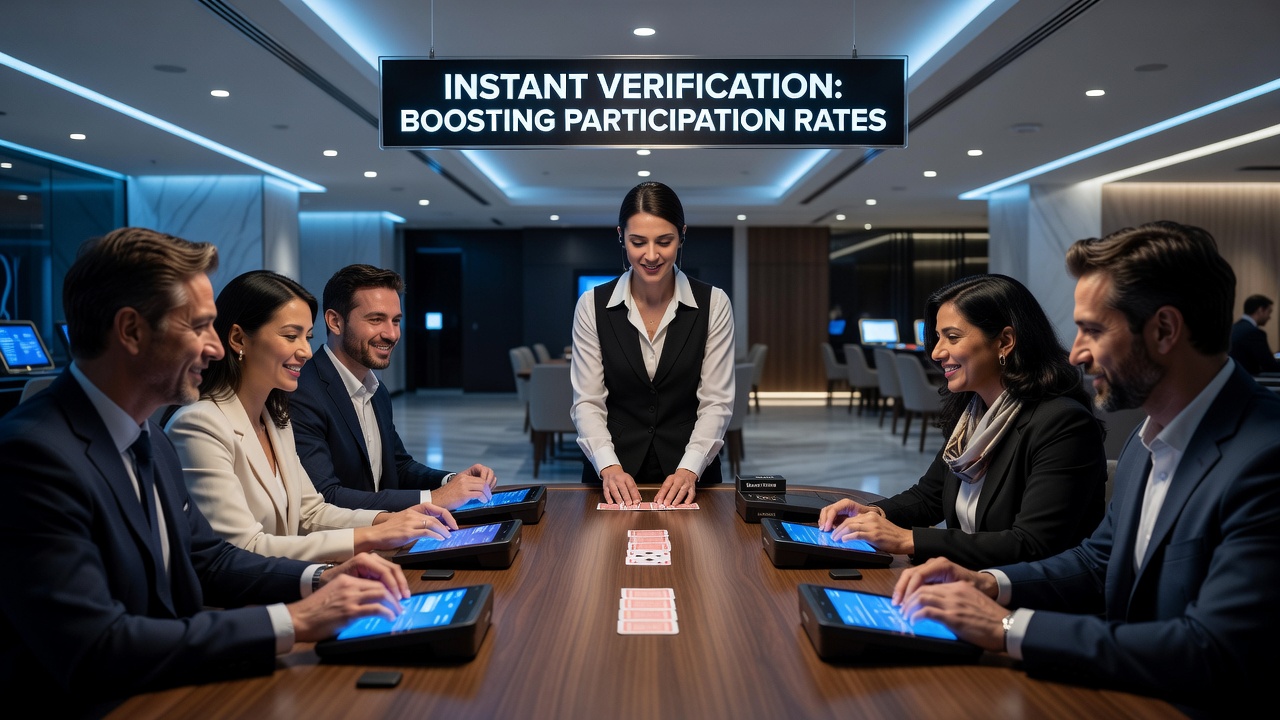
Participation metrics collected by platform operators reveal that instant verification correlates with higher first-day activity levels, while traditional methods produce drop-off rates that exceed 40 percent between sign-up and first game. In regions where regulators permit automated checks tied to national ID systems, table traffic has increased steadily since 2024, and figures from the Ontario Alcohol and Gaming Commission show a 19 percent rise in active accounts for live dealer card products during the twelve months ending September 2026. Those who complete verification instantly tend to return for multiple sessions within the same week, creating compounding effects on overall engagement numbers. Platforms that still rely on delayed manual reviews continue to record lower conversion from visitor to active participant.
Regulatory Frameworks Across Jurisdictions
Different oversight bodies shape how quickly operators can deploy instant tools, and the Nevada Gaming Control Board has issued guidance that supports biometric and database-linked verification while requiring audit trails for each transaction. In contrast, the Alcohol and Gaming Commission of Ontario mandates specific data retention periods that affect how verification records are stored and accessed. These rules influence the speed of rollout and, by extension, the participation patterns observed in each market. European operators operating under remote gambling directives have adopted similar automated protocols, and cross-border data from the European Gaming and Betting Association shows participation stability when verification aligns with local privacy standards.
Operational Adjustments by Platform Providers
Operators have responded by embedding verification steps into the game lobby itself so players receive prompts only once before entering dealer-hosted rooms, and this approach reduces repeated interruptions during peak hours. Case examples from major platforms indicate that combining document scanning with liveness detection cuts support ticket volume related to account access by roughly one third. Those managing high-volume tables report that verified players remain seated longer on average because they encounter fewer interruptions for additional checks mid-session. Data collected in September 2026 across North American sites pointed to a consistent pattern where faster entry translated into higher cumulative hands played per account.
Future Tracking and Measurement Approaches
Industry analysts continue to monitor participation through standardized metrics such as verified account creation rates, time-to-first-bet, and repeat session frequency, and academic researchers have begun longitudinal studies that compare pre- and post-implementation figures across matched markets. These efforts rely on anonymized datasets supplied by operators under regulatory reporting requirements, and the resulting models help forecast how further refinements in verification speed might affect table occupancy. Observers expect continued iteration as new biometric methods and expanded database partnerships come online.
Conclusion
Instant verification systems have altered the entry pathway into dealer-hosted card games by shortening the interval between interest and active play, and available participation data reflects measurable differences across regions with varying regulatory approaches. Continued collection of metrics through 2026 and beyond will clarify the extent to which these tools sustain higher engagement levels over longer periods.