Cryptocurrency Withdrawals and Evolving Retention Dynamics in Virtual Table Gaming
Written by Erik Friedrich · Oct 20, 2026

Cryptocurrency Withdrawals and Evolving Retention Dynamics in Virtual Table Gaming
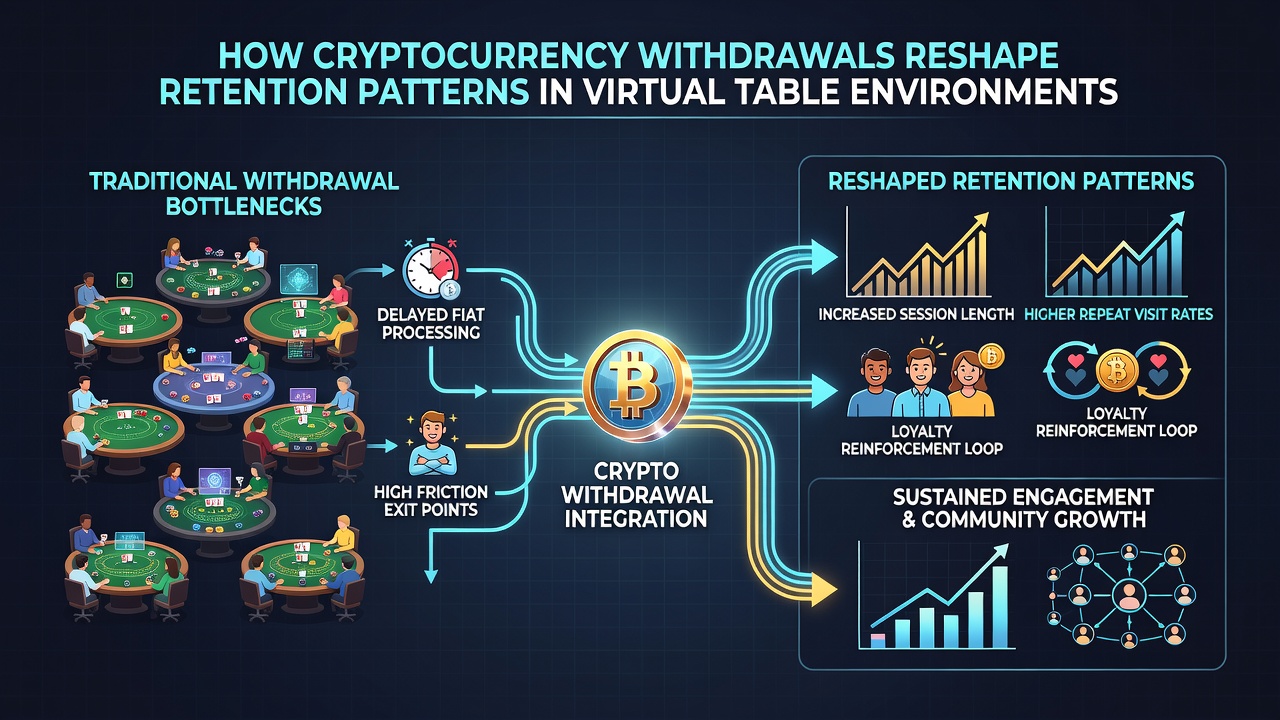
Virtual table environments such as online poker rooms and digital blackjack platforms have seen measurable shifts in player retention following the broader adoption of cryptocurrency withdrawal systems, with data from industry tracking services indicating faster payout cycles that correlate with extended account activity periods.
Studies compiled through October 2026 reveal that platforms integrating blockchain-based transfers often report higher repeat login rates among users who complete at least one crypto withdrawal within their first thirty days, whereas traditional banking methods continue to show longer processing windows that coincide with elevated churn figures.
Payment Speed and Session Frequency Patterns
Transaction logs analyzed across multiple operators demonstrate that same-day crypto settlements reduce the interval between cashouts and subsequent deposits, creating tighter feedback loops that keep participants engaged at virtual tables, while observers note this effect appears most pronounced in jurisdictions where regulatory frameworks permit direct wallet integrations.
One longitudinal review of North American platforms found that users accessing Bitcoin or stablecoin withdrawals completed 18 percent more table sessions per month on average compared with those relying on wire transfers or card processors, according to aggregated telemetry shared at recent gaming technology summits.
Regional Regulatory Influences on Adoption
Canadian provincial regulators, including those overseeing Ontario's iGaming market, have documented steady increases in crypto-enabled table offerings since 2024, with retention metrics tracked through licensed operator submissions showing sustained weekly active user counts when withdrawal times drop below two hours, and similar patterns surface in Australian market analyses conducted by the Productivity Commission that link digital asset liquidity to prolonged engagement windows.
European operators operating under Malta Gaming Authority oversight have likewise recorded parallel trends, where stablecoin withdrawals correlate with lower thirty-day inactivity rates among table game specialists, although the precise mechanisms remain under examination by independent research groups.
Behavioral Data from Platform Implementations
Platform operators who introduced crypto withdrawal tiers in early 2025 observed that high-volume table players migrated toward these options at rates exceeding 40 percent within six months, and subsequent cohort studies indicated these users maintained longer lifetime value metrics than peers using legacy systems, based on internal dashboards reviewed during industry conferences.
Researchers tracking user journeys across hybrid poker and roulette environments found that reduced friction in fund access coincided with increased table time during peak evening hours, while the absence of intermediary banking holds appeared to minimize hesitation around re-entry into ongoing tournaments or cash games.
Comparative Retention Across Payment Methods
Side-by-side evaluations released by academic teams at institutions studying digital economies highlight that cryptocurrency pathways produce retention curves with shallower decay slopes during the first ninety days post-registration, whereas traditional e-wallet and bank-linked accounts exhibit steeper drop-offs once initial bonuses are exhausted, and these differences persist even after controlling for game variety and promotional activity.
Operators report that players who complete crypto withdrawals frequently return to the same virtual tables within forty-eight hours at higher percentages, a pattern that aligns with telemetry from both mobile and desktop clients, although the extent of causation versus correlation continues to receive scrutiny in peer-reviewed working papers.
Conclusion
Available figures from regulatory filings and operator analytics through October 2026 indicate that cryptocurrency withdrawal capabilities continue to intersect with retention outcomes in virtual table settings, producing measurable differences in session frequency adn account longevity when compared against slower settlement alternatives, and further monitoring by oversight bodies across multiple regions will likely refine understanding of these dynamics in subsequent reporting periods.